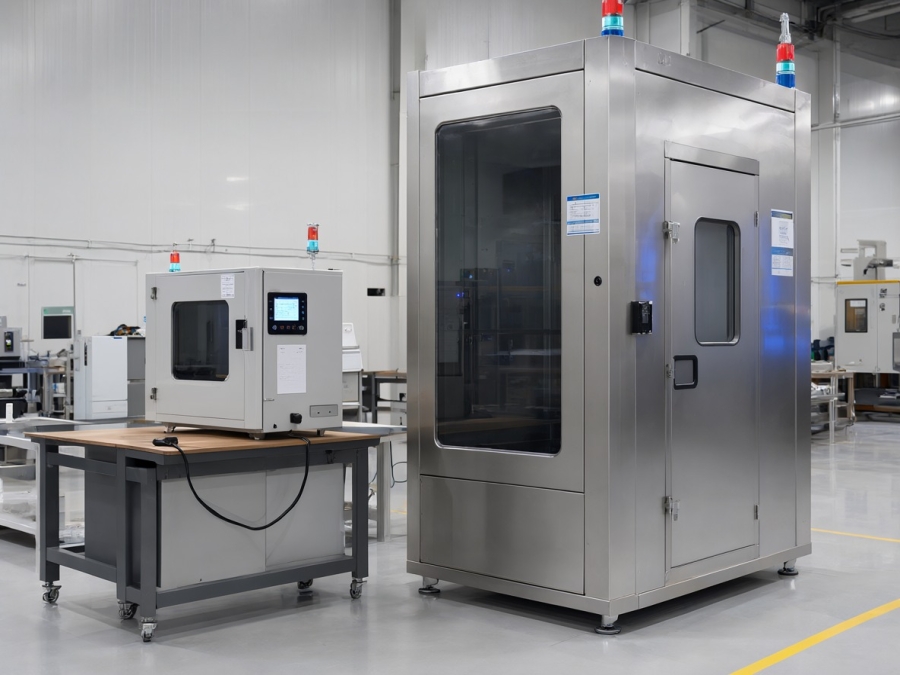
A temperature and humidity chamber is a high-value precision test instrument, and choosing it well directly affects product-testing accuracy and laboratory operating costs. Faced with a market full of brands and models, buyers easily fall into traps. This article sets out the core points every purchaser must master.
When assessing whether a chamber meets your needs, focus on these hard technical specifications:
- Size and volume match: the test specimen should not exceed 1/3 of the chamber's working volume so that airflow circulates freely and the test environment stays uniform.
- Temperature ramp rate: decide whether you need a "standard type" (1–3°C per minute) or a "rapid-change type" (5°C, 10°C or even 15°C per minute); rapid ramping places very high demands on the compressor and control system.
- Thermal load capability: if specimens generate their own heat while powered on (on-load testing), tell the manufacturer in advance so a larger-capacity refrigeration unit can be matched.
- Materials and workmanship: the inner chamber should normally be stainless steel (e.g. SUS304) and the outer casing anti-static powder-coated, so the chamber does not rust or deform after long exposure to humid heat.
To make procurement efficient and accurate, purchasing and technical teams should follow these steps:
- Clarify test standards: first confirm the industry or national standards the product must meet (e.g. ISO, MIL-STD, IEC) and fix the required temperature and humidity limits.
- Survey the lab site: check door and elevator dimensions, floor loading, power supply (usually three-phase 380 V), drainage and ventilation.
- Compare technical proposals: invite 2–3 qualified suppliers to submit custom proposals, comparing controller stability, compressor brand and warranty terms on core components.
- Check after-sales capability: as the chamber is a long-term capital good, the vendor's periodic calibration support and fast remote maintenance response are crucial.
In short, buying a temperature and humidity chamber is far more than "look at the price and order". Only by starting from your own test requirements and weighing performance, site fit and lifetime maintenance cost can you choose the most cost-effective "right hand" for your quality management.