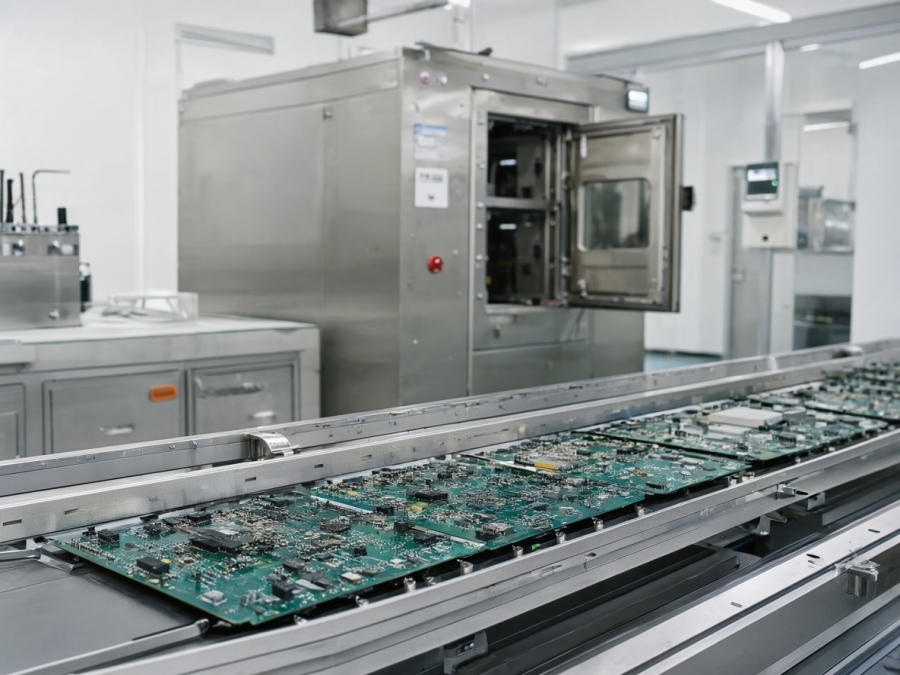
In modern manufacturing a new product must survive countless verifications on its way from drawing board to market. As the core instrument of environmental reliability testing, the temperature and humidity chamber's role goes far beyond final QC. It accompanies the product through the whole life cycle — "extreme-breakdown testing in early R&D", "fatigue testing at design freeze" and "defect screening in mass production". This article explains, stage by stage, how the chamber works with engineers to build impeccable quality.
In the early R&D and design stages, product structure and material recipes are not yet mature. Engineers use the chamber for "deliberate destruction", hunting the design's theoretical limits and latent defects:
- Highly Accelerated Life Testing (HALT): the chamber subjects early prototypes to extreme temperatures several times beyond normal service (e.g. -70°C or 150°C), deliberately provoking physical failure to find the critical points where housings embrittle, PCB solder joints crack or sealants fail.
- Material compatibility and moisture-absorption assessment: store specimens long-term at 40°C/93% RH and observe whether different materials swell, mould or react chemically after absorbing moisture, optimising material selection.
- Fast design iteration: problems exposed inside the chamber (discoloured plastics, rusted metal, drifting electronic components) let the R&D team adjust the design at lab cost, before defects leak into expensive mass production.
Once the design is frozen and pilot runs scale to mass production, the chamber's mission shifts to "quality control" and "purification", ensuring every shipped batch is highly consistent:
- Environmental Stress Screening (ESS): in production, products pass through several rapid temperature-humidity cycles inside chambers. The test does not damage good units but precisely weaves out "infant-mortality" products caused by cold solder joints, defective components or unreleased assembly stress, cutting field-return rates.
- Periodic lot sampling (LTPD): QC periodically pulls finished goods off the line for standard 85/85 or cyclic damp-heat tests, monitoring process stability and guarding against quality slides from raw-material batch variation.
- Shipment compliance reports: for high-end custom, military or automotive-grade orders, the chamber's temperature-humidity run curves and pass data become part of the product's traceability file, delivered directly to the end customer.
Whether it is extreme pushing in R&D or strict gating in production, disciplined operation and rigorous test flows are the foundation of true data:
- Custom fixtures in R&D testing: R&D tests often route probes into specimens. Wire sensibly through the cable ports and fix specimens with dedicated explosion-proof, temperature-resistant tooling so forced airflow cannot shift or topple them.
- Write stepped ramp programs: in qualification tests do not set extreme jumps directly. Use the controller's programming to set ramp rates per minute and dwell times at each temperature so thermal stress inside the specimen releases evenly.
- Follow stacking rules in production screening: never pack the chamber to chase throughput. Strictly observe the "no more than 1/3 of the wind-facing cross-section" rule, leaving adequate vertical and horizontal air lanes between specimen rows so every unit is heated and humidified evenly.
- Real-time data integration with MES: modern production lines require closed-loop data. Temperature, humidity curves and alarm records generated during testing should upload via Ethernet or Wi-Fi to the plant MES and be permanently bound to that batch's barcodes.
In short, the temperature and humidity chamber is more than a test instrument — it is a quality guardian accompanying the product from "infancy" to "maturity". In R&D it is a stern examiner, forcing weaknesses out with brutal cold and heat; in production it is a steady filter, intercepting every flawed unit inside the factory gate and protecting the company's reputation.