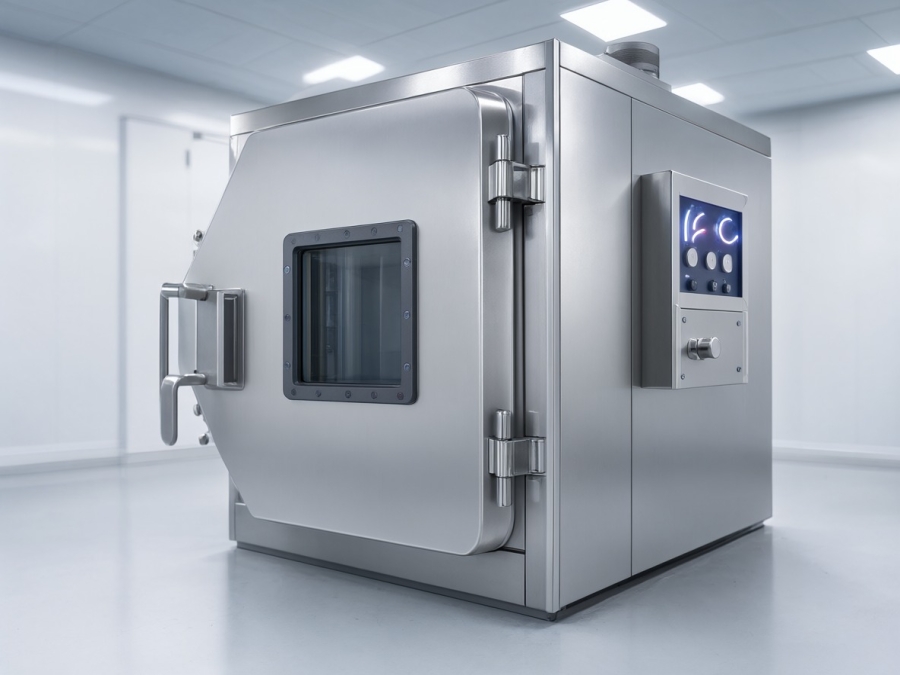
The temperature and humidity chamber (also called a constant temperature and humidity chamber) is an indispensable environmental simulation test device in modern industrial manufacturing and scientific research. By precisely controlling temperature and humidity inside the chamber, it faithfully reproduces extreme conditions found in nature — severe cold, intense heat, high temperature with high humidity, or low temperature with low dryness — to verify a product's resistance to heat, dry conditions, extreme cold and moisture.
The equipment is widely used across these core industries and fields:
- Electronics & electrical appliances: verifies the performance stability of integrated circuits, semiconductors, capacitors, mobile phones and home appliances under extreme temperature and humidity.
- Automotive manufacturing: tests the ageing and weathering resistance of automotive electronic parts, instrument panels, lamps and rubber seals.
- Aerospace: simulates extreme high-altitude or deep-space environments to qualify critical components and composite materials.
- Materials & chemicals: studies the physical degradation and chemical changes of new materials such as plastics, rubber, coatings and adhesives under long-term humid heat.
The precise operation of a temperature and humidity chamber relies on the coordinated work of several core systems:
- Refrigeration system: usually compressor mechanical refrigeration or cascade refrigeration, using refrigerant circulation to lower chamber temperature quickly and reach extreme low temperatures.
- Heating system: typically nickel-chromium electric heaters with fast thermal response, working with a microcomputer controller for precise heating and temperature stability.
- Humidification & dehumidification system: humidification generally uses steam or shallow water-tray methods; dehumidification works through the refrigeration circuit, condensing water vapour out of the air for precise relative-humidity control.
- Control system: the "brain" of the equipment, usually a programmable microcomputer touch-screen controller (e.g. PLC) supporting multi-segment programming and automatic recording of temperature-humidity curves.
To keep test data accurate and extend equipment life, follow these maintenance rules in daily use: clean the humidification tank and replace the wet-bulb cloth regularly; clean dust from the condenser once a quarter to preserve cooling efficiency; and always site the chamber in a well-ventilated location with ample clearance around it for heat dissipation.