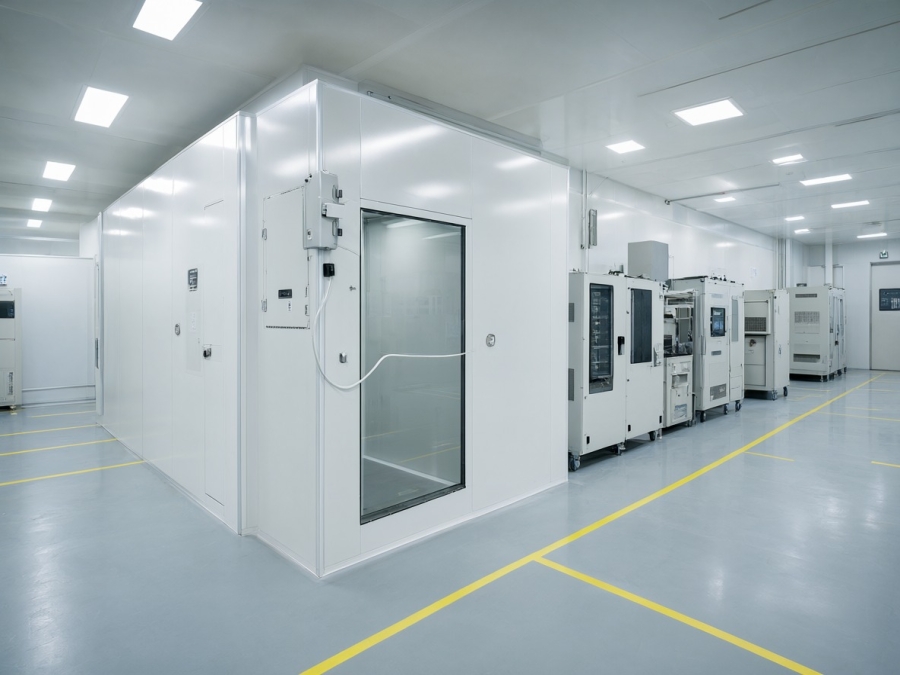
The temperature and humidity chamber is the "core workhorse" of environmental reliability testing, used across electronics and semiconductors, automotive and new energy, aerospace, and defence research. But as test standards keep rising and R&D needs diversify, selecting and running a chamber is no longer just reading a spec sheet. This article gives an in-depth professional analysis across three dimensions: precise selection, non-standard customization, and overall laboratory planning.
Faced with a market full of standard models, buyers who choose imprecisely end up with either "redundant performance wasted" or "insufficient parameters to run the test". Precise selection should follow these hard rules:
- Meet the boundaries of the test standard: first master the domestic or international standards the product must follow (IEC 60068, MIL-STD-810G, GB/T 2423, etc.). Fix the absolute temperature limit (is -70°C required?), the absolute humidity limit, and whether temperature cycling is needed.
- The "golden ratio" of working-volume size: specimen volume should not exceed 1/3 of the chamber's wind-facing cross-section, and total specimen volume should stay within 1/5 to 1/3 of the working volume. This keeps the duct circulation unobstructed and avoids serious local temperature-humidity non-uniformity around specimens.
- Assess "thermal load" accurately: if specimens run powered and self-heat during the test (battery charging, head units running, etc.), this is on-load testing, and the heat directly offsets cooling capacity. Calculate specimen heat output in watts so the manufacturer can fit a larger refrigeration unit.
- Choose ramp rates rationally: standard chambers heat at about 2.0–3.0°C/min and cool at 0.7–1.2°C/min. If the standard demands faster changes (5°C/min, 10°C/min or more), a linear or non-linear rapid-change chamber is required, and price and core components multiply accordingly.
In real R&D, standard chambers often cannot cover every special test scenario — this is where custom engineering matters. When discussing a custom build with the manufacturer, engineers must strictly control these details:
- Special cable ports and interfaces: standard units usually provide one 50 mm or 100 mm cable port. If the test needs many signal wires, high-voltage leads or fluid lines, customise the number, position and diameter of ports in advance and require temperature-resistant silicone sealing plugs.
- Reinforced load-bearing and explosion-proof design: for EV battery packs or heavy machine parts, standard shelf loading (typically 20–30 kg) is far from enough — order a reinforced base plate. For lithium-battery testing the chamber must also add explosion-proof door locks, pressure relief vents, tri-colour indicator lights, fire-suppression interfaces and combustible-gas alarms.
- Viewport and blind-spot optimisation: if high-precision cameras must record specimen appearance changes (material swelling, LCD behaviour), the fog-free zone and lighting angle of a standard window may be limiting. Specify a full glass, electrically heated anti-condensation large viewport, or add explosion-proof heat-resistant LED lighting inside.
A temperature and humidity chamber is a high-power, high-heat-rejection machine with water services. Bringing one into a lab is far more than finding floor space and plugging it in. Scientific lab planning follows these steps:
- Power supply and electrical safety verification: large chambers draw from several kW to tens of kW and generally need three-phase five-wire (380 V/50 Hz) supply. Ensure the lab distribution panel has adequate redundancy and give every chamber its own dedicated circuit breaker — never share.
- Heat rejection and ventilation design: while cooling, compressors and condensers dump large heat into the room. A cramped, poorly ventilated lab causes high-pressure trips and damage. Fit a high-capacity extraction system, or choose a water-cooled refrigeration unit (with an external cooling tower).
- Humidification water supply and drainage works: humid-heat testing demands water with resistivity above 500 Ω·m (purified, distilled or deionised water recommended). Plan the water-purifier location in advance, and since humidification and dehumidification produce condensate, provide clear floor drains under or behind the equipment.
- Clearances and maintenance aisles: to preserve heat rejection and service access, keep at least 60–80 cm between the chamber sides/rear and walls or other equipment, and more than the door swing radius of free space in front.
In summary, as the "gatekeeper" of quality management, a temperature and humidity chamber's selection precision, customization rationality and installation science directly determine the credibility of reliability data and the machine's working life. Only by fitting technical specifications, custom details and lab engineering together can a company build a truly efficient, safe and green modern reliability laboratory.